
The northern lights are quite unpredictable. You can never know for sure when they will appear or how long you’ll be able to enjoy them. Sometimes the light show disappears within a few minutes, while on other nights the northern lights can stay visible for hours.
So, how long do the northern lights usually last? Can they stay visible all night, what time should you head out to see them, and how long should you wait? In this article, we’ll look at how long the northern lights can last and what to keep in mind when planning a night of aurora watching in Lapland.
- How long do northern lights last? Key takeaways
- How long do the northern lights last at a time?
- How late into spring can you see the northern lights?
- What factors affect how long the northern lights last?
- What time do the northern lights usually appear?
- How long does a northern lights display stay in one place?
- Why do the northern lights suddenly disappear?
- How long should you wait for the northern lights?
- How long do aurora borealis last in photos?
- Summary: How long do northern lights last?
- Sources
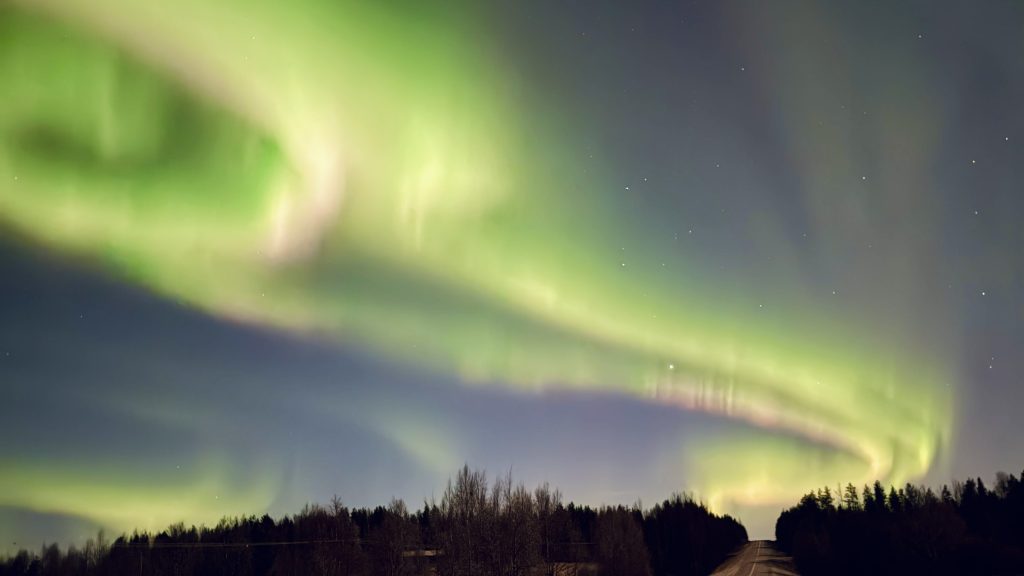
How long do northern lights last? Key takeaways
So, how long do the northern lights actually last? There’s no single answer, as every night is different. Sometimes the northern lights appear only briefly, while on other nights they can be visible for hours. Here are the key things to know:
- The duration varies: The northern lights can last anywhere from a few minutes to several hours.
- They can disappear and return: If the aurora fades, the show isn’t necessarily over. The lights may disappear and return several times during the same night.
- There’s no fixed schedule: It’s impossible to predict exactly when the northern lights will appear or how long they will last.
- Conditions matter: Besides auroral activity, you need clear, dark skies and a good viewing location.
- It can be worth the wait: A quiet sky can quickly become active.
How long do the northern lights last at a time?
A single northern lights display can either last for just a few minutes or continue for several hours. In practice, it is almost impossible to predict the exact duration, as auroral activity can change very quickly during the same evening. It is quite typical that at one moment the sky can be filled with brightly dancing northern lights, while at another, you may only see a faintly glowing green streak.
How late into spring can you see the northern lights?
The northern lights can be seen as long as the nights are dark enough. In its tips for watching the aurora borealis, the Finnish Meteorological Institute mentions that auroras occur fairly evenly throughout the year, slightly more often in autumn and spring than in winter and summer.
Based on our own experience, the best northern lights season in Lapland begins with the arrival of autumn and continues well into spring, usually until April. However, as the amount of daylight increases, the potential time for spotting the northern lights becomes shorter.
Auroral activity itself does not stop during the summer either, but Lapland’s nightless nights mean that the northern lights can no longer be seen with the naked eye.
What factors affect how long the northern lights last?
The duration of the northern lights is mainly affected by solar activity. Particles travel from the Sun towards Earth, and when they interact with the Earth’s magnetic field, northern lights can appear in the sky. The stronger the activity, the brighter and longer-lasting the northern lights can be. However, the activity can change quickly, which is why, for example, two consecutive nights can look completely different.
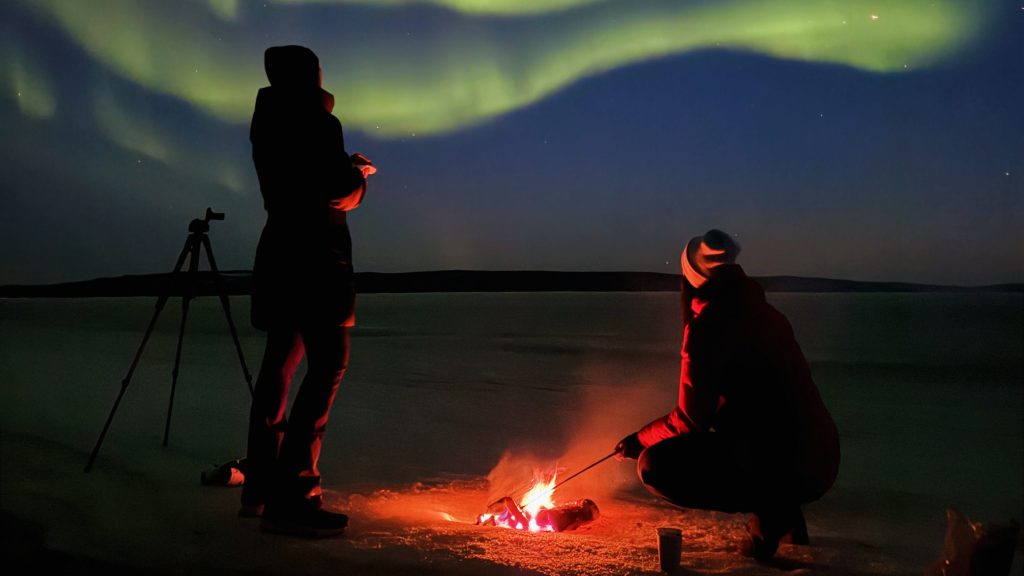
Viewing conditions also play a major role in how long you can actually watch the aurora borealis. In our previous article, we summed up the most important things to consider when choosing a place to see the northern lights:
- Find an open area with a clear view of the sky
- Get away from city lights
- Look for clear, cloudless skies
- Wait until the sky is dark
- Be prepared to wait and, if necessary, change locations
What time do the northern lights usually appear?
Like few other natural phenomena, the northern lights do not follow a specific schedule either. They can appear as soon as it gets dark, in the middle of the night, or sometimes not until the early hours of the morning. One thing is certain, however: if you’re planning to go hunting for the northern lights, you’ll need to wait until it gets dark.
As we point out in our When and where can you see the northern lights? article:
“The long, dark nights of winter offer especially good opportunities to see the northern lights.”
Here in Finnish Lapland, for example, people often head out to see the northern lights in the evening or early at night. If you’re dreaming of heading to Rovaniemi in search of the northern lights, book your place on one of our northern lights tours and join us for an unforgettable adventure!
How long does a northern lights display stay in one place?
The northern lights usually don’t stay in one place in the same way as, for example, a clear, starry sky. Their shapes, brightness, and position are constantly changing. While a slow-moving green arc can remain almost the same for a long time, strong northern lights can move and change shape in a matter of seconds.
In the following sections, we’ll take a closer look at whether the northern lights can last all night and whether they can return after disappearing.
Can the aurora borealis last all night?
Yes, auroral activity can continue throughout the night. However, this doesn’t necessarily mean that you’ll see a spectacular light show glowing across the sky for hours without a break. At times, the aurora borealis can be bright and move quickly, only to calm down and become almost unnoticeable soon after. On the most active nights, this can happen again and again.
Can the aurora borealis come back after they disappear?
Yes, they can. The northern lights may disappear from view completely and return later the same night. So, if the sky is clear and the aurora forecast still looks promising, their disappearance definitely doesn’t mean that you should give up. It is exactly this unpredictability and mystery that often makes hunting for the northern lights so fascinating.
Why do the northern lights suddenly disappear?
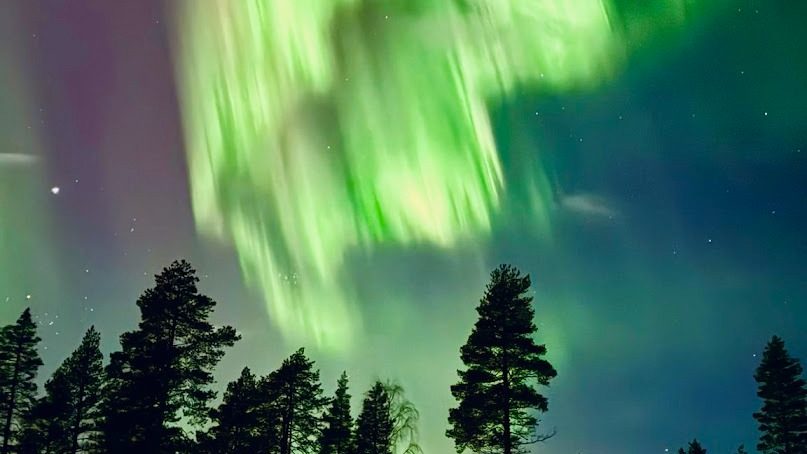
The northern lights can disappear just as quickly as they appeared, and there can be several reasons for this. One reason is, of course, changes in auroral activity, meaning space weather and the Earth’s magnetic activity. If the activity weakens or the active area moves elsewhere, it is quite natural for the northern lights to fade or disappear from view very quickly.
However, auroral activity itself is not always the reason. To see the northern lights with the naked eye from the ground, you need a clear, cloudless sky. For example, clouds moving over your viewing location can completely block the naurora borealis from view, even if they are still present above the clouds.
How long should you wait for the northern lights?
When waiting for the northern lights, it’s generally a good idea to set aside some time and, sometimes, a little patience as well. Even if the conditions look good in advance, there’s no way to promise that the northern lights will appear within the next half an hour, for example. Sometimes you may see them almost immediately, while other times the wait can be considerably longer.
If the sky is clear and the forecast looks promising, it’s worth taking your time and not giving up after the first viewing spot or a quiet moment. That’s why we recommend packing some curiosity and a backpack full of adventurous spirit for a northern lights tour, along with warm clothes and a camera.
How long do aurora borealis last in photos?
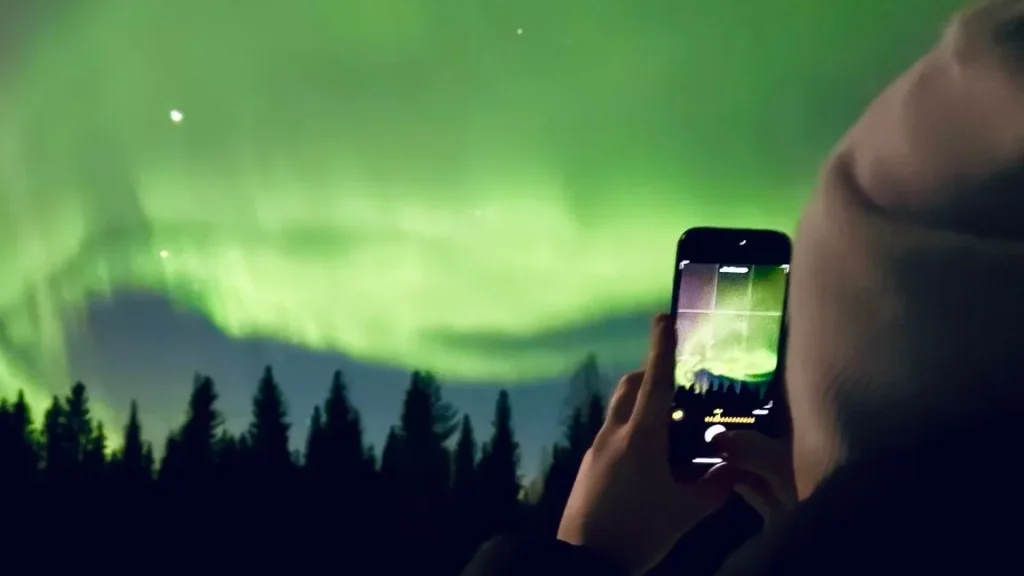
How the aurora borealis appear in a photo depends mainly on the exposure time used. A camera can see the northern lights differently from the naked eye, and especially faint auroras can show up surprisingly well in photos. That’s why it’s worth keeping your phone ready even if you can only see a faint green glow in the sky.
Scandinavian Photo shares a few useful tips for photographing the northern lights with a phone:
- Turn off your phone’s flash.
- Activate the camera’s night mode or use manual settings/Pro mode with a slow shutter speed.
- Use a tripod or support your phone against something stable.
With these methods, the camera can make better use of the limited available light and produce sharper photos. With a longer exposure, the northern lights can appear brighter and smoother, while a shorter exposure can capture the shapes of fast-moving auroras more clearly. It’s worth experimenting with different settings depending on the conditions and auroral activity.
Summary: How long do northern lights last?
The aurora borealis can last anywhere from a few minutes to several hours. During a single night, they can grow stronger, fade, disappear completely, and return again later. On some nights, this magical display is short and intense, while on more active nights, you may get to see the northern lights several times throughout the night.
If you’re in Lapland and want to spend the evening searching for the northern lights without having to figure out the best viewing locations yourself, you can join one of our local guides on a tour. On My Lapland Travel’s northern lights tours, we head out in search of the best locations for the evening’s conditions while enjoying the Lapland night along the way.
Explore our Northern Lights tours
Sources
Best place to see aurora borealis – Where to go
When and where can you see the northern lights?
Scandinavian Photo: Revontulien kuvaaminen