
A pale arc first appears in the sky. Moments later, it may spread into a green curtain with a flash of pink along its edge. What are the northern lights, and why do they look different every time? For us at My Lapland Travel, they are a reason to head out into the darkness again and again.
In this article, we explain what the northern lights are, what causes them, what their colours reveal and which conditions are best for seeing them.
- What are the northern lights? A quick explanation
- What are the northern lights called?
- What actually causes the northern lights?
- What is so special about the northern lights?
- What color are the northern lights?
- Do auroras make a sound?
- How rare is it to see aurora?
- What direction are the northern lights?
- What country has the prettiest Northern Lights?
- Will 2027 be a good year to see the northern lights?
- Sources
What are the northern lights? A quick explanation
5 key takeaways from this article:
- The northern lights are a light display in the upper atmosphere, caused by energetic particles colliding with atmospheric atoms and molecules.
- Auroras in the Northern Hemisphere are called aurora borealis. The equivalent phenomenon in the Southern Hemisphere is aurora australis.
- Green is the most common aurora colour. Red, blue and purple can also appear.
- Seeing the northern lights requires dark skies and sufficiently clear weather. Even strong auroral activity cannot help if clouds block the view.
- Finnish Lapland is an excellent destination for a northern lights trip.
What are the northern lights called?
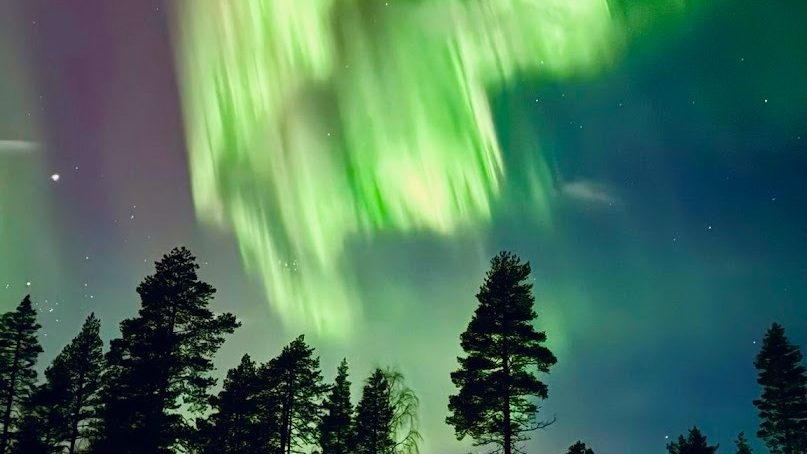
The northern lights are internationally known as aurora borealis, referring to the phenomenon seen in the Northern Hemisphere. In the Southern Hemisphere, the corresponding names are aurora australis and southern lights.
What actually causes the northern lights?
The northern lights occur when energetic electrons guided by Earth’s magnetic field collide with atoms and molecules in the upper atmosphere. These collisions excite atmospheric particles, which then release their excess energy as light. The phenomenon is driven by the interaction between the solar wind flowing from the Sun and Earth’s magnetic field.
However, how clearly the northern lights can be seen from the ground does not depend solely on space weather. As explained in our previous article, aurora visibility is also affected by cloud cover, ambient light and light pollution at the viewing location:
“To see the northern lights with the naked eye from the ground, you need a clear, cloudless sky. For example, clouds moving over your viewing location can completely block the naurora borealis from view, even if they are still present above the clouds.”
What is so special about the northern lights?
People often ask us, “Why is aurora so special?” What fascinates us most is its unpredictability. A seemingly quiet arc of light can suddenly turn into a breathtaking aurora display. And just as quickly as it appears, it can fade from sight. You never quite know what will happen next.
It is easy to lose track of time while watching the northern lights. Standing in the quiet of nature and looking up at the sky, your attention shifts away from everyday concerns, allowing your mind to relax. In a wide, open landscape, the display can be so striking that it is difficult to put into words.
What color are the northern lights?
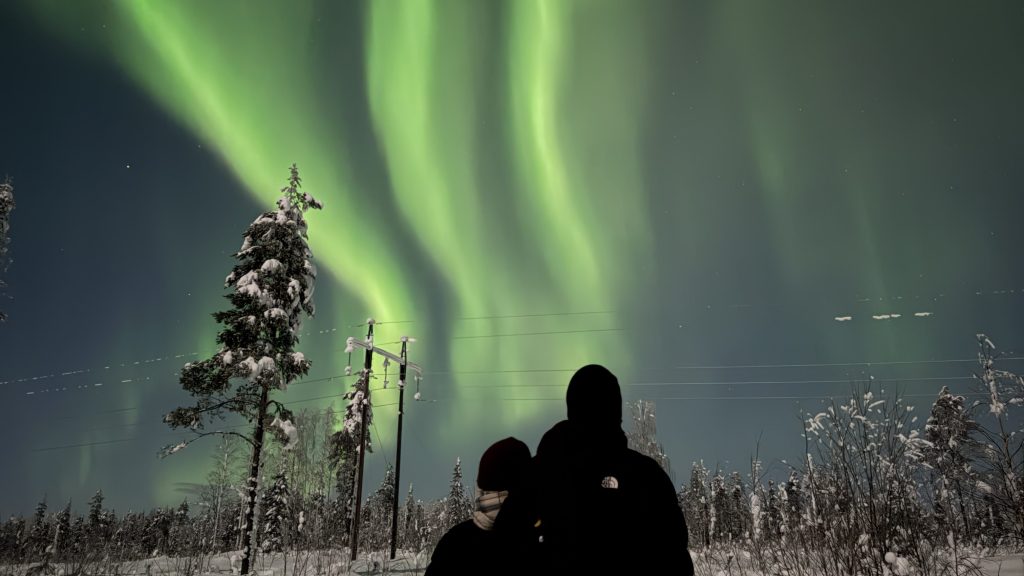
The northern lights can be green, red, blue or purple, with shades of pink sometimes appearing along their edges. The colour varies depending on which atmospheric atoms and molecules emit the light and the altitude at which this happens.
A single display can feature several colours, either overlapping or appearing at different heights. This is why the lower edge of an auroral curtain may look quite different from its upper reaches.
Next, we look at the most common colour and explain why the rarest shade is harder to identify.
What is the most common color of the northern lights?
Green is the most common colour of the northern lights. A green arc or curtain is a familiar sight in many aurora photographs. This colour appears when excited oxygen atoms release energy as green light.
What is the rarest aurora color?
While green is clearly the most common aurora colour, identifying the rarest shades is considerably more challenging. Based on our own experience, we would name blue and red among the rarest.
Blue shades can be difficult to distinguish with the naked eye, while a deep-red display is also an exceptional sight. Red light is produced by oxygen atoms high in the atmosphere, whereas blue and purple shades are associated with nitrogen.
Do auroras make a sound?
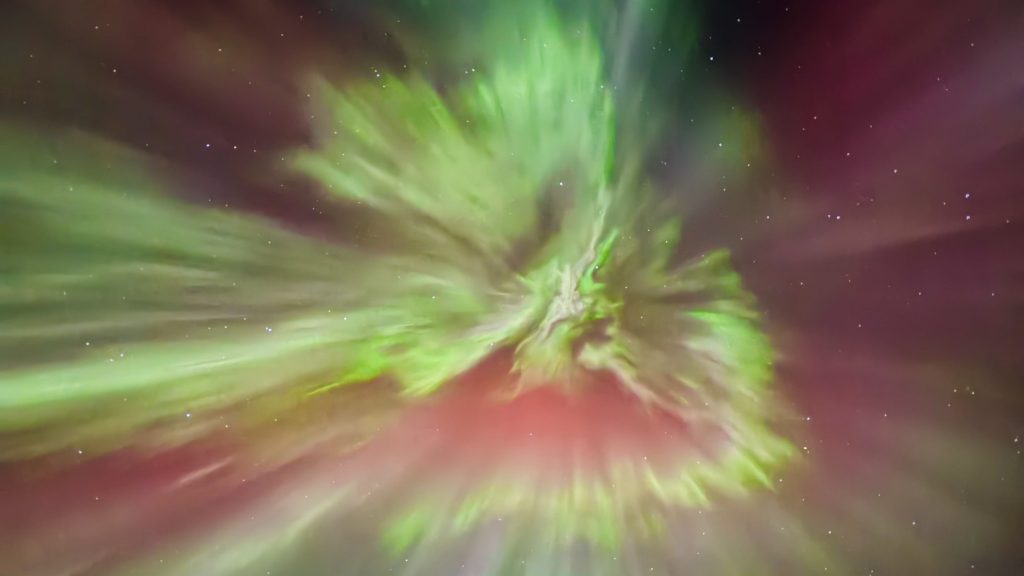
The sounds reportedly associated with the northern lights have been the subject of considerable debate for centuries. Many different descriptions and explanations have been proposed, but the most likely explanation is that the sounds are auditory illusions.
The Ursa Astronomical Association discusses the subject in its article:
“In the early 20th century, British physicist Sir Oliver Lodge, who contributed to the development of radio technology, suggested that the sounds of the northern lights might be a psychological phenomenon. When the eyes perceive a vivid auroral display, the brain’s auditory centre may, in a sense, add sounds to the visual experience.”
The argument against auroral sounds is that sound should not be able to travel from the altitude at which the northern lights occur down to our ears at ground level, because the atmosphere there is close to a vacuum.
How rare is it to see aurora?
How rare it is to see the northern lights depends primarily on where you look. In northern Lapland, they are a regular feature of the dark-season sky, whereas farther south in Europe, sightings are less common and generally require stronger geomagnetic activity.
According to the Finnish Meteorological Institute, auroras are observed near Kilpisjärvi’s latitude on average three nights out of four when the sky is clear and dark. However, this figure represents a long-term average.
What direction are the northern lights?
In Finland, the northern sky is often a good place to start looking, especially if you are south of the auroral zone. However, the name does not mean that the lights only appear to the north.
In Lapland, auroras can spread directly overhead and, during a powerful display, across the southern sky too. Choose a location with as wide a view as possible. An unobstructed northern horizon helps you spot low-lying arcs, but remember to turn around and look in other directions from time to time.
What country has the prettiest Northern Lights?
Based on our experience, we can say that the most beautiful northern lights destinations are found in the Nordic countries. We cannot overlook Finnish Lapland, which is also the home base of My Lapland Travel.
As we mentioned in our article Best place to see aurora borealis – Where to go, the northern lights can be seen in Northern Finland on average every other night during the aurora season. Overall, auroras occur in the region on around 200 nights a year.
If you dream of taking a holiday in search of the northern lights, head to Finnish Lapland. At My Lapland Travel, we offer northern lights experiences from Rovaniemi, but we also search beyond our immediate area when necessary to find the most favourable conditions. If the weather or aurora activity is not promising at our nearest viewing locations, we are prepared to take our guests farther afield in search of better views – even across Finland’s borders.
You can learn more about the best times and places to see the aurora in our article When and where can you see the northern lights?.
Will 2027 be a good year to see the northern lights?
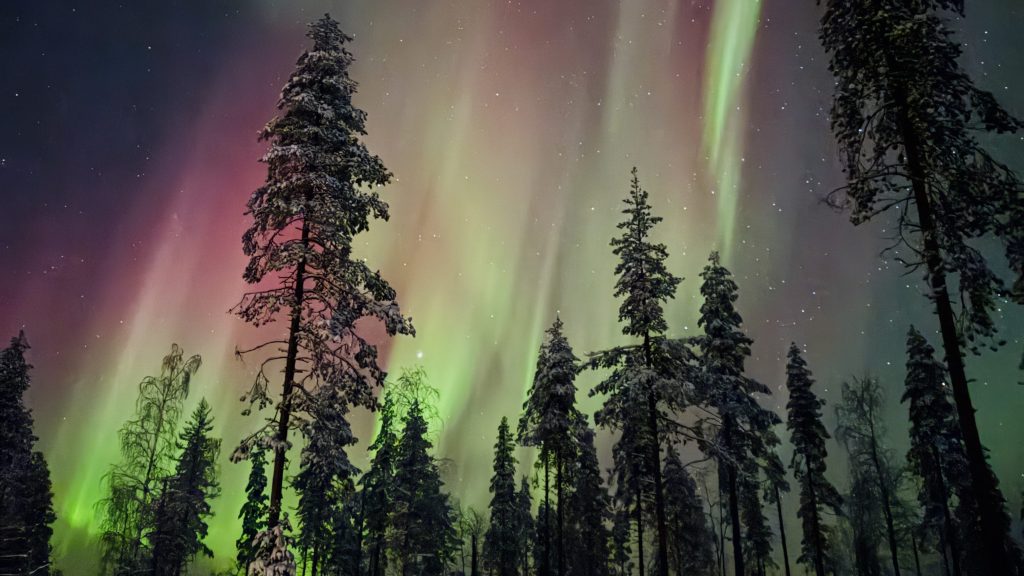
2027 could well bring some spectacular northern lights evenings to Finnish Lapland. The impressive displays of recent years certainly give us plenty to look forward to.
If you are planning a northern lights trip for 2027, contact My Lapland Travel and tell us when you will be visiting Rovaniemi and who you are travelling with. We can help you choose an aurora tour that fits your plans. The sky decides the evening’s display, but on our Northern Lights Tours, we seek out the best possible viewing conditions.
“Every Northern Lights Tour we guide is different, shaped by the night and the people we share it with. We choose quiet, dark spots away from the crowds, so you can watch the aurora dance without distractions. Our guides know when it’s worth waiting a little longer, and that patience often makes the night unforgettable.”
Sources
Northern Lights Tours from Rovaniemi Across Lapland
How long do northern lights last – timing your aurora
Best place to see aurora borealis – Where to go
When and where can you see the northern lights?