
Do you always have to stay up until midnight to see the northern lights, or can they appear earlier in the evening? And is winter really the only time of year to spot them? If you’re planning a night out looking for the aurora, timing matters. But there’s more to it than checking the clock. Where you are, how dark it is and how cloudy the sky is all affect what you’ll see.
So, what time can I see the northern lights? In this article, we’ll walk you through when to head out, which seasons give you the best chance of catching a display and what’s worth checking before you step outside to wait for the lights.
- What time are the northern lights usually visible?
- What time are the northern lights strongest?
- Does the time of year affect when you can see the northern lights?
- What is the best time to see the northern lights in Lapland?
- What affects the time you can see the northern lights?
- Frequently asked questions about the best time to see the northern lights
- Want to see the northern lights in Lapland?
- Sources
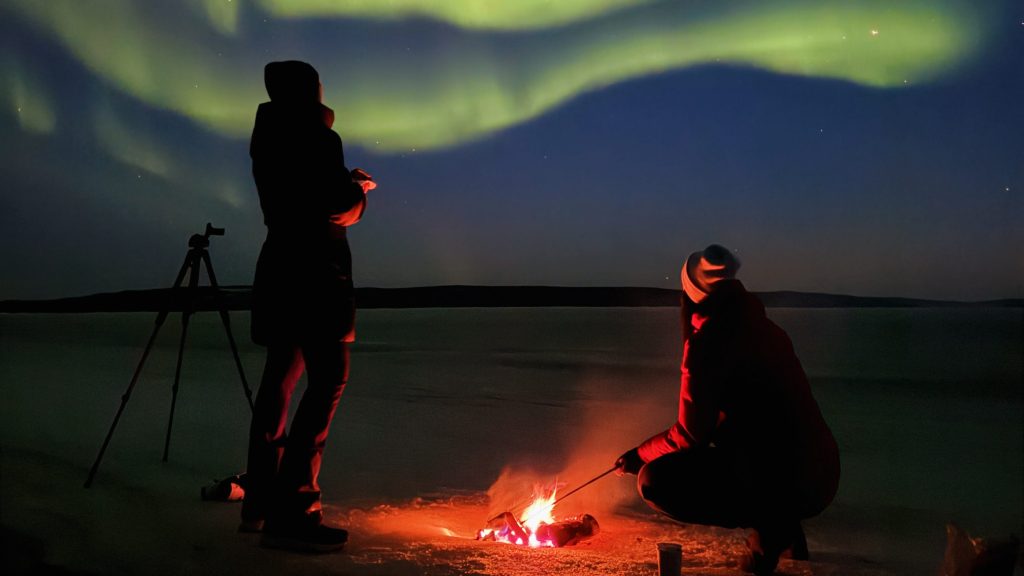
What time are the northern lights usually visible?
Of course, there’s no single best time to see the northern lights that applies to every location and season. As we mentioned in our previous article, the best time in northern regions is generally between late autumn and early spring. The season can start earlier, though:
“Here in Finnish Lapland, for example, the northern lights season begins in late summer as the nights grow darker and continues well into spring. The long, dark nights of winter offer especially good opportunities to see the northern lights.”
Once it’s properly dark and the sky is clear, it’s worth stepping outside to take a look. In many northern destinations, you can do this early in the evening during winter, while in spring you’ll need to wait longer for darkness.
What time are the northern lights strongest?
If you’re wondering whether it’s worth staying up a little longer for the northern lights, it often is. According to NOAA, the most impressive displays usually happen around midnight, roughly between 10 pm and 2 am local time. Around midnight, the lights are often brighter and move more actively across the sky. Still, the clock can’t guarantee a great display. Sometimes the best moment comes earlier in the night; other times, it arrives in the early hours of the morning. During strong geomagnetic activity, there may be good viewing opportunities over a much longer stretch of the night.
Does the time of year affect when you can see the northern lights?
Yes, the time of year makes a big difference to aurora visibility. But as we explain in our previous article, you can see the northern lights as long as the nights are dark enough and the other conditions are right. Auroras can occur in summer too, but the bright nights in the far north prevent us from seeing them with the naked eye.
The season also plays a part in auroral activity. NOAA’s article “Tips on Viewing the Aurora” explains that the periods around the spring and autumn equinoxes are the best times for aurora watching:
“Due to subtleties in the way the solar wind interacts with Earth’s magnetosphere, there is a tendency towards larger geomagnetic storms, and thus better auroras, to occur near the equinoxes.”
In our experience, the skies are also more likely to be clear and cloudless around these times of year, making the northern lights easier to see.
What is the best time to see the northern lights in Lapland?
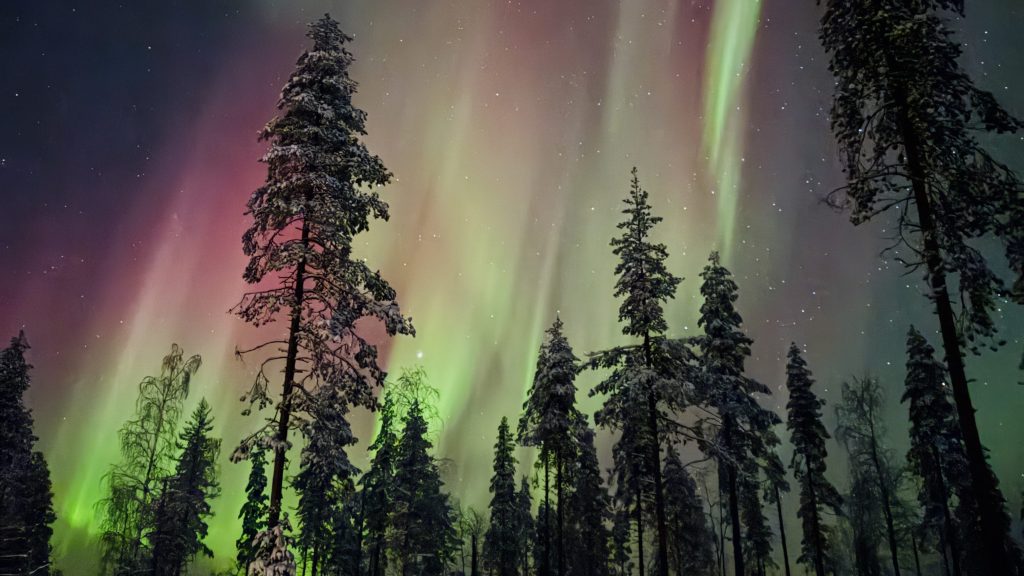
The best times to see the northern lights in Lapland are late autumn, before snow clouds start to form, and spring, when snowfall becomes less frequent. That said, there is also a good chance of seeing them throughout the winter.
Late evening and around midnight are generally the best times to look for the lights. The Finnish Meteorological Institute explains it this way:
“At 9 pm (Finnish standard time), the average probability of auroral occurrence in Lapland exceeds 50%. It peaks at around 11:30 pm, which is magnetic midnight, when disturbances in Earth’s magnetic field associated with auroras are at their strongest.”
These times are a guide rather than a precise schedule, though, as several factors can make a big difference to aurora visibility.
Planning a trip to Lapland? Get in touch with us at My Lapland Travel and tell us when you’ll be in Rovaniemi. Book a northern lights tour with us, and we’ll find the most promising viewing spots for the night and take you there.
What affects the time you can see the northern lights?
The time of day, or even the season, alone won’t tell you when the northern lights will be visible. Here are 6 key factors to consider:
- Solar activity and solar wind conditions
- The state of Earth’s magnetic field
- Your location
- Cloud cover
- Moonlight and surrounding light pollution
- How long it stays dark
Solar activity and solar wind conditions affect disturbances in Earth’s magnetic field, which in turn influence how strong the aurora is and how far from the polar regions it can be seen. Your location therefore makes a big difference. The season determines when it gets dark enough to see the lights. Clouds can hide the entire display, while streetlights or bright moonlight make fainter auroras harder to spot.
You can read more in our article What causes the northern lights? A simple explanation.
Frequently asked questions about the best time to see the northern lights
A few practical questions often come up when planning a northern lights trip. Do you need to stay up past midnight, and can the same display last until morning?
We’ve answered some common questions below to make planning your evening or upcoming trip a little easier.
Can you see the northern lights before midnight?
Yes. The northern lights can appear earlier in the evening, as long as it’s dark enough and conditions are right. You don’t need to wait until midnight to start looking.
Can you see the northern lights after midnight?
Yes. Displays can continue or become more active after midnight, sometimes lasting into the early morning. If the sky is clear and activity is promising, staying out a little longer may be worthwhile.
Are the northern lights visible all night?
Sometimes, but they rarely look the same throughout the night. They may brighten, fade and return several times. Cloud cover and increasing daylight can also interrupt the view.
How long do the northern lights usually last?
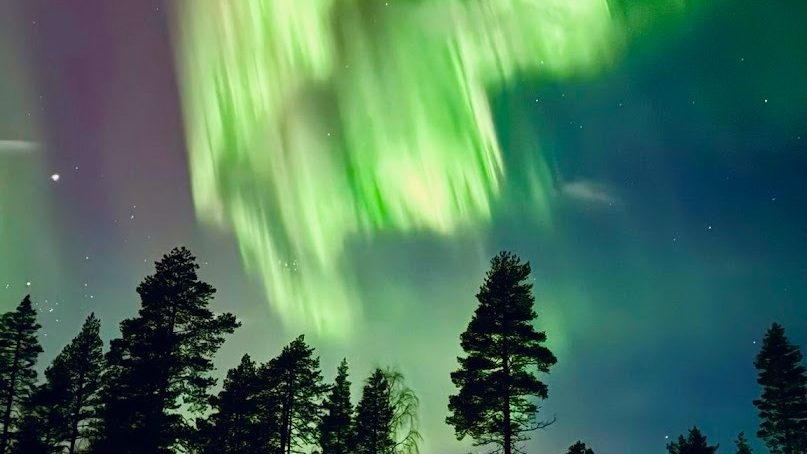
A bright burst may last only a few minutes, while a broader display can continue for hours. There’s no fixed duration, so don’t assume the evening is over if the lights briefly fade.
What is the best time to see the northern lights in Finland?
In Finland, look for the northern lights on dark, clear evenings between late summer and early spring. They’re seen more often in Lapland than farther south, and late evening and around midnight are generally good times to watch. If you’re visiting Rovaniemi and would rather have someone help plan the evening, take a look at our northern lights tours. Your guide can adjust the viewing location and the evening’s plans to suit the conditions.
Want to see the northern lights in Lapland?
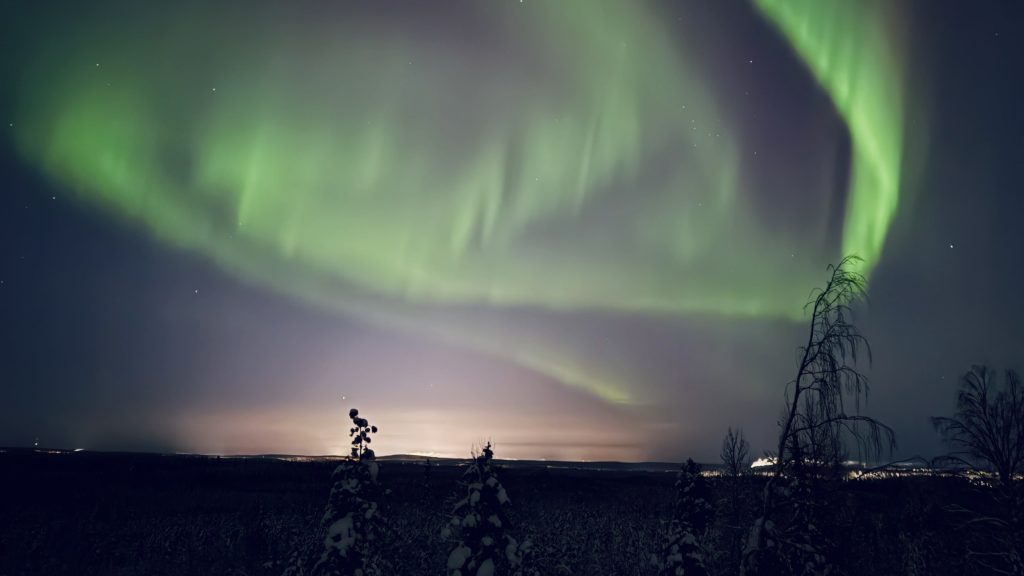
In Lapland, it’s easy to build a whole holiday full of experiences around watching for the northern lights. As we explain in our Best place to see aurora borealis article:
“Finnish Lapland is one of the best places in the world to see the northern lights. Its northern location, long aurora season, and easy access to dark natural surroundings create ideal conditions for seeing the aurora. There is also plenty to do during the day, so aurora hunting can easily be combined with an unforgettable winter holiday in Lapland.”
So head to Lapland and explore our exciting tours. If you’d like help choosing, get in touch and tell us when you’re visiting and what you’d like to do. We’ll help you find activities that fit your holiday.
Sources
When and where can you see the northern lights?
What causes the northern lights? A simple explanation
How long do northern lights last – timing your aurora
Best place to see aurora borealis – Where to go